

Photo: The Terrible Inspection 恐怖的檢查 (circa 1947) by Huang Rong-can 黃榮燦
Written by Mary Brandt
Published March 12, 2025
Friday, February 28, 2025, marked the 78th anniversary of the 228 Incident. It remains one of the most controversial events in the island’s modern history due to its significant place in Taiwan’s collective historical memory and the diverging narratives attributed to its memorialization. The 228 Incident was a violent crackdown by the Kuomintang (KMT) government on local Taiwanese civilians, which led to thousands of deaths and marked the beginning of the White Terror period. For decades, the incident was suppressed under martial law, shaping a fractured historical narrative. The historical memory of 228 remains deeply contested—while some see it as a symbol of Taiwanese resistance against authoritarian rule, others struggle to reconcile different perspectives shaped by political divisions. While the government has taken steps toward transitional justice—including public apologies, compensation for victims’ families, and the declassification of historical records—the incident remains politically and emotionally charged. This article seeks to explore the historical narratives surrounding 228, its memorialization, and how it continues to shape Taiwan’s collective historical memory.
What Happened?
Historically, one of the most frequently overlooked factors driving the 228 Incident was the government’s handling of Taiwan’s economy through the state-controlled monopolization of selected markets to generate wealth. The monopolization of camphor, salt, opium, sulfur, coal, and gold was first introduced to Taiwan under the Qing Dynasty. When the Japanese colonized Taiwan in 1895, monopolization was reduced to only salt and sulfur. The Japanese were responsible for much of Taiwan’s economic and infrastructural development and were viewed favorably by some of the Taiwanese people who benefited from the improvement of living standards. Under Japanese occupation, the Taiwanese had the opportunity to govern themselves, and a few held official positions, but much remained unequal in the colonial system. For example, the Monopoly Bureau had “fewer than 10 Taiwanese who were promoted to technician or appointed as an officer until the end of World War II,” and despite working the same jobs, “the salary structure of the employees varied by nationality.” When Japan surrendered as part of the Axis powers in World War II, it ceded Taiwan to the Republic of China, bringing a sense of hope in the process of “Retrocession.” However, the transition from a Japanese colony to a Chinese province proved challenging, as the shift in power was abruptly imposed on the Taiwanese people.
Chiang Kai-shek appointed Ch’en Yi the garrison commander of the Taiwan province. While the KMT government debated whether the monopoly system should continue in Taiwan, it was ultimately decided that it would be the most stable medium to rebuild the economy. The Monopoly Bureau was reestablished in 1947 as the Tobacco Monopoly Bureau, and it controlled the sale of tobacco, alcohol, and camphor. Notably, it became a primary revenue source for the National Treasury. To maintain its monopoly, the Bureau banned the sale of illicit cigarettes, disproportionately affecting small vendors who relied on selling such goods to survive. The KMT lacked the resources to govern as effectively as their Japanese counterparts. Furthermore, they were embroiled in a civil war with the Chinese Communist Party, which drained resources from the Taiwanese people who had no interest in being entangled in yet another war.
The immediate catalyst for the protests occurred on February 27, 1947, when six investigators from the Taipei branch of the Monopoly Bureau along with four police officers from the Taipei Police Station confiscated contraband cigarettes from Lin-Chiang Mai, a Taiwanese widow with two young children, in front of a teahouse in Taipei where she usually sold legal cigarettes. As a supplement to her income, she also possessed contraband tobacco, most of which was smuggled by businessmen with close relations to KMT officers. Suddenly, the agents of the Tobacco Monopoly Bureau appeared with a dozen policemen and proceeded to confiscate Mai’s goods, both legal and illegal, along with her small amount of cash. She begged the agents to return her legal cigarettes and income, and in response, one of the agents beat her on the head with his pistol. The agents’ brutality and refusal to return the money infuriated the surrounding witnesses, who damaged the Monopoly Bureau’s vehicle. Investigator Fu Hsueh-t’ung fired a warning shot attempting to disrupt the crowd, but instead, “injured a passer-by, Ch’en Wen-hsi (who died the following day.)” These acts of excessive force ignited island-wide protests against the KMT government, fueled by deep-seated frustration over inflation, corruption, rising unemployment, and the suppression of Taiwanese rights.
Word spread “quickly and deliberately,” and by the following day, February 28, 1947, a march of over 2,000 people was organized and headed toward the Tobacco Monopoly Bureau, demanding justice for the massacre and the resignation of the Bureau’s director. There were only a small number of KMT police to hold the Bureau, and they were terrified by the march and the threats of violence incited against mainlanders. This fear further escalated tensions, leading to the shooting of two more protesters during the march. This marked a turning point—chaos and violence erupted on both sides. While some protesters demanded accountability, others captured and fatally beat two Bureau agents. Throughout March 1947, demonstrations and widespread violence continued, with local leaders submitting thirty-two demands to the KMT government, most notably including greater autonomy for Taiwan Province (of the ROC), government transparency, and free elections.
The more the Taiwanese protested for their rights, the more aggressively the government sought to suppress dissent. The KMT used fear tactics such as killing intellectual and cultural figures as a warning to suppress the protests. In March, Chiang Kai-shek directed the Nationalist Army to Taiwan and Ch’en Yi ordered the disbanding of the Resolution Committees for the February 28 Incident and all other ‘illegal groups’” As a result of these orders, between 3,000 and 4,000 Taiwanese were killed. For example, regionally renowned painter Chen Cheng-po served as a city councilor member and a mediator between local residents and the KMT military. Instead of engaging in dialogue, the KMT officials captured, imprisoned, and publicly executed Chen on March 25, 1947, displaying his body for three days until his family could collect his remains.
A photo of the location where violence first broke out in front of what was the tea house.

Photo: Han Cheung, Taipei Times
On March 9th, following the uprisings, martial law was imposed for a period of time by Taipei and Keelung, but was lifted the next day. In mid-May, Ch’en Yi was called back to China, and Wei Dao-ming came in his stead. His first act was to remove martial law and halt arresting and killing civilians. A year later, the “White Terror” began, and while it is often conflated in Taiwan’s history as being a direct reaction to the 228 Incident, it actually originated from anti-communist sentiment in China as the KMT was embroiled in a civil war against the Chinese Communist Party (CCP). As the color red is associated with communism, the color white symbolizes anti-communism, and that is how it became known as the White Terror.
The White Terror functioned as a political purging campaign, where any opposition to the ruling government was deemed a threat and broadly categorized as “communist sympathizers.” While the White Terror spread to Taiwan from policies and sentiments that originated in China, the political atmosphere after the 228 Incident did play a role in who was targeted by the KMT. The KMT targeted Taiwanese people who opposed its rule, branding them as communists or communist sympathizers, even though many were advocating for reform and greater rights as Taiwanese. The White Terror was marked by widespread disappearances, extrajudicial killings, and the systematic suppression of political dissent. There was also a massive cover-up and elimination of evidence and government documents. As a result, the true number of casualties remains unknown to this day, with estimates ranging from 18,000 to 28,000 deaths. During this thirty-eight-year period of martial law, the 228 Incident was not discussed openly, and there was no collective remembering or memorialization of this massacre and the discrimination against Taiwanese that followed.
Taiwan’s Collective Historical Memory and 228’s Memorialization
Two years after martial law was lifted in 1987 by Chiang Kai-shek’s son, Chiang Ching-kuo, the movie A City of Sadness (Bei qing chengshi/ 悲情城市) was released. Not only is City a landmark film in Taiwanese history and culture, but Hou Hsiao-hsien’s film marked a pivotal moment in the collective remembering of 228. It was the first historical representation of 228 to enter popular public discourse in Taiwan. While some critics have noted that the movie is not historically accurate in every detail, others have emphasized that this testifies to how 228 could be remembered due to the lack of freedom of information. In a way, 228 remained a “concealed history” when City was first released.
In 1995, Taiwan’s first democratically elected president of the KMT party, Lee Teng-hui, issued a formal apology on behalf of the government for the 228 Incident. He had personally participated in the 1947 protests and was arrested as an “instigator and Communist sympathizer.” Lee’s apology was accompanied by tangible steps toward memorialization and historical reckoning. He declared February 28 as a national holiday, naming it Peace Memorial Day, and in 1996, Taipei’s Taipei New Park was officially renamed 228 Peace Memorial Park as a dedicated commemorative space. While some viewed these efforts as genuine, others saw it as the KMT trying to change history by “turning a tragedy into a holiday.”
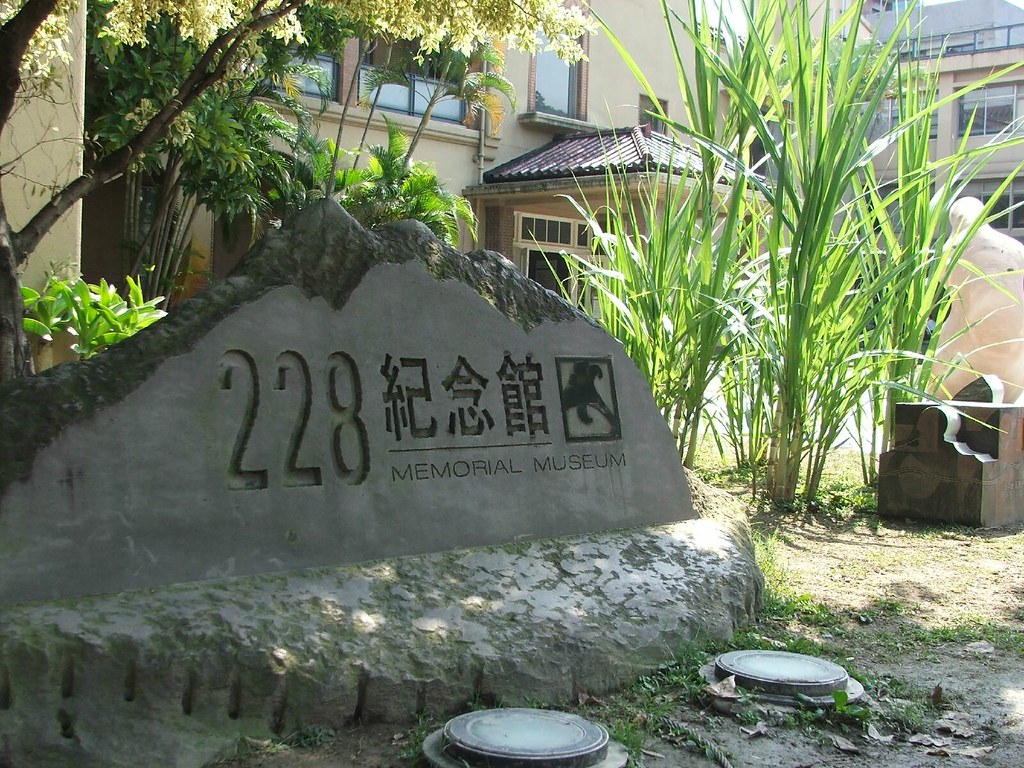
A decade later, efforts to institutionalize remembrance continued with the construction of the National 228 Memorial Museum. However, when it reopened in 2011 after renovations, updates to its exhibits and signage faced significant criticism, highlighting the complexities of historical representation. Ultimately the museum’s reflection of events was changed to include more nuance so as to not “white-wash” the KMT’s actions, grouping the violence against Taiwanese exclusively as an anti-Communist effort. It was not until 2017 that President Tsai Ing-wen declassified the remaining 4,617 government documents related to the 228 Incident, marking a crucial step toward transparency and confronting Taiwan’s authoritarian past.
There is also the widespread memorialization of 228 outside of the government’s efforts. Community-run events hold an important place for the memorialization of 228 today. For example, this year’s 228 memorial service at Jinan Presbyterian Church was themed Burying the Seeds of History, and Sprouting the Buds of Justice. The service was held in both Mandarin and Taiwanese, which was an appropriate nod to the diverse group of people in attendance, and to the fact that despite the KMT’s restriction of Taiwanese in schools during the White Terror, the language lives on.
In 2025, the 228 Memorial continues to play a crucial role in reshaping the narrative surrounding the massacre and the suppression of Taiwanese rights and identity. Today the central issue is how authoritarian ruler Chiang Kai-shek is remembered. Chiang’s legacy is now increasingly scrutinized for his role in the 228 Massacre and the White Terror period. The Chiang Kai-shek Memorial Hall, arguably the most recognizable symbol of his leadership, has become a focal point of debate, with ongoing discussions about recontextualizing or even repurposing the site to reflect a more critical view of his rule.

Photo: Wikimedia Commons
228’s remembrance and memorialization—through art, public apologies, dedicated spaces, and community gatherings—reflect Taiwan’s ongoing, albeit imperfect, efforts to confront its past. While its memorialization has been contentious, 228 has also united Taiwan, as it symbolizes democratic resilience against authoritarian bullies. The 228 Incident remains a defining moment in Taiwan’s authoritarian past and holds great weight in Taiwan’s collective historical memory because the country succeeded in democratization. For it is only a free and open society that allows its people to engage with, disagree about, and memorialize a massacre.
 Taiwan Center for Security Studies