
May 16th 2024
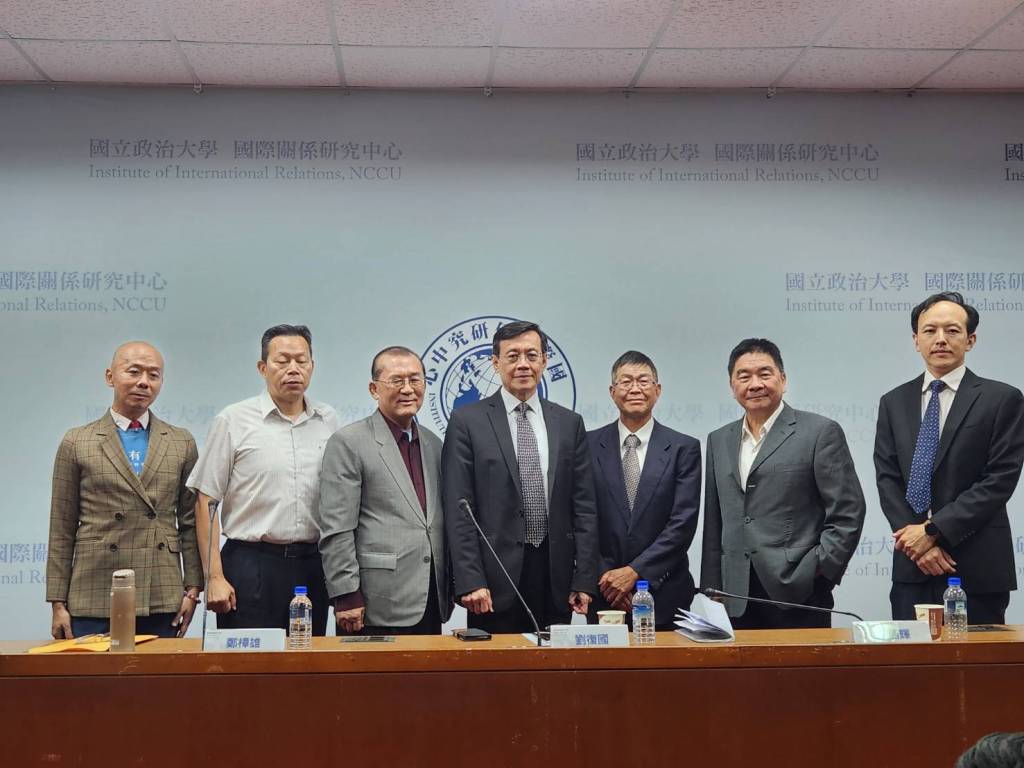

The Institute of International Relations of National Chengchi University held a conference on issues in the South China Sea on May 16th. Hosted by Dr. Liu Fu-Kuo, research fellow of the Institute of International Relations, and Professor in the International Doctorate Program in Asia Pacific Studies Program (IDAS), National Chengchi University, the purpose of this session was to discuss the status of Taiping Island and Taiwan in relation to the region. Taiping Island is the largest island of the Spratly Island archipelago. Its location makes it strategically important to a number of parties, making it an arena for hegemonic competition. Speakers included Cheng Chang-Hsiung, former Deputy Administrator of the Coast Guard; Song Yan-huei, Retired Researcher at the Institute of European and American Studies, Academia Sinica; Jui-Chou Richard Hu, Deputy Director of the Taiwan Center for Security Studies; Chen Wei-Hua, Associate Professor in the Department of Public Security of Central Police University; and Li Jing-Qi, former Deputy Director of the Eastern Branch of the Coast Guard Administration, Ocean Affairs Council.
Dr. Liu Fu-Kuo stated that amidst the backdrop of strategic competition between China and the United States, tension in the South China Sea will indeed continue to escalate. With the United States assisting the Philippines with intervention in the South China Sea, the Philippines, Vietnam, and Malaysia have continuously expanded their claims in region. However, these claims dwarf in comparison to those of China. As of now the Philippines have mobilized more than 100 fishing boats to Scarborough Shoal which may lead to more possible confrontations and skirmishes. The President of the Philippines, Ferdinand Marcos Jr.’s South China Sea policy seeks the moral high ground through international media and utilizes public opinion warfare, as seen through footage of China’s coast guard exerting pressure in the region by attacking vessels with water cannons. Dr. Liu stated that the government has neglected the intensifying situation for the past 8 years, seemingly not wanting to draw attention to the issue, while facing aggressive expansion in the South China Sea by neighboring countries.
This issue serves as a significant warning for Taiwan as President Tsai Ing-wen exits office, and passes over the reins President-Elect William Lai. The South China Sea is currently one of the most important regions of focus. Taiping Island remains a part of Republic of China territory, but its status amongst the international community is disputed between four parties.
 Taiwan Center for Security Studies