
April 15th 2024
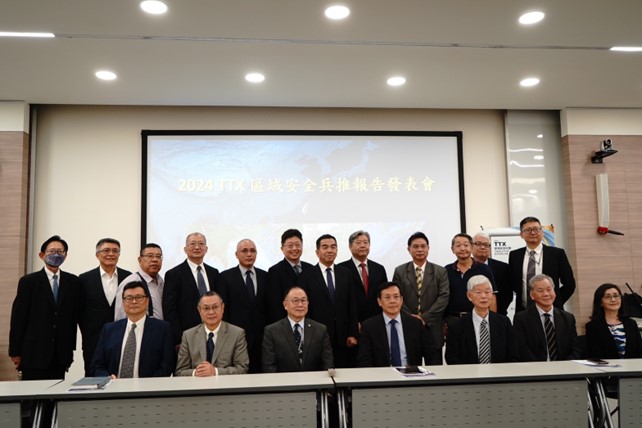
The 2024 Tabletop Exercise (TTX), held on March 14-15, convened participants from various regions and countries to analyze and forecast the political and economic situation of our nation over the next decade, offering a broader perspective on national security strategies. The scenario was set between 2027 and 2032, a period that sees leadership changes in both the US and China, aimed at enhancing strategic thinking and foresight in areas such as cognitive warfare, grey zone conflicts, and war guidance under the umbrella of national security strategies.
A key focus of the 2024 TTX, led by the chief planner since the 2023 TTX, has been the principle that “crisis prevention is preferable to crisis management; it’s better to manage risks than manage the damage.” This approach seeks to unearth the essence of national security and explore paths towards peace and avoiding warfare, unlike traditional military exercises that primarily simulate combat scenarios.
The exercise was built on the understanding that the foundation of war is political, rooted deeply in the welfare of the people and the economy. The planners emphasized the importance of societal resilience as the primary concern for national security, focusing on critical sectors such as energy, food, power, healthcare, and communications.
Economic issues such as finance, stock and currency markets, and cryptocurrencies were highlighted as special features of the discussions, recognizing that economic power plays a significant role in geopolitical strategies often hidden behind visible competitions.
The discussions also explored the potential widespread impacts of a conflict across the Taiwan Strait, involving and possibly affecting neighboring countries, emphasizing the interconnected security concerns in the South China Sea and the ASEAN region.
Despite the potential for severe military confrontations, societal resilience remains foundational to combat readiness and overall national strength. With a historical understanding of national security, the military simulations emphasized survival, development, and security as key pillars, adhering to principles of non-engagement unless absolutely necessary.
Consequently, the 2024 TTX carved out a “National Security Strategy” aiming for peace and stability, designed to maximize national benefits at a strategic level. Meanwhile, the “National Defense Security Strategy” focuses on military readiness and winning extended military engagements. This strategic focus underscores the need for a comprehensive national defense that genuinely addresses the needs of the people, guiding both military and civil defense strategies towards ensuring lasting peace and security.
 Taiwan Center for Security Studies