
The Institute of International Relations at National Chengchi University recently held the Strategic Vision Workshop on Maritime Governance and National Security Challenges in Taiwan, in which leading scholars and practitioners addressed the emerging risks facing the Indo-Pacific, with a particular focus on civilian grey-zone operations, undersea infrastructure, and the evolving strategic landscape surrounding Taiwan.
Session 1
Professor Huang-sheng Tseng posed the Agreement on the Conservation and Sustainable Use of Marine Biological Diversity of Areas Beyond National Jurisdiction (BBNJ) as a cross-level international governance framework that Taiwan could use to increase its activity in the international sphere, becoming a power in high seas fisheries management.
Filling in for Professor Hui-chen Lai of the NDU Naval Academy, Professor Shih-Peng Lin highlighted Taiwan’s growing role in Indo-Pacific maritime domain awareness, including its use of AI-driven analysis and anomaly detection to strengthen national security and respond to grey-zone activity.
Analyzing ESG from both micro and macro lenses, Professor Tien-yu Wu concluded that beyond being an industry tool, ESG can also function as a new platform for maritime governance dialogue.
Session 2
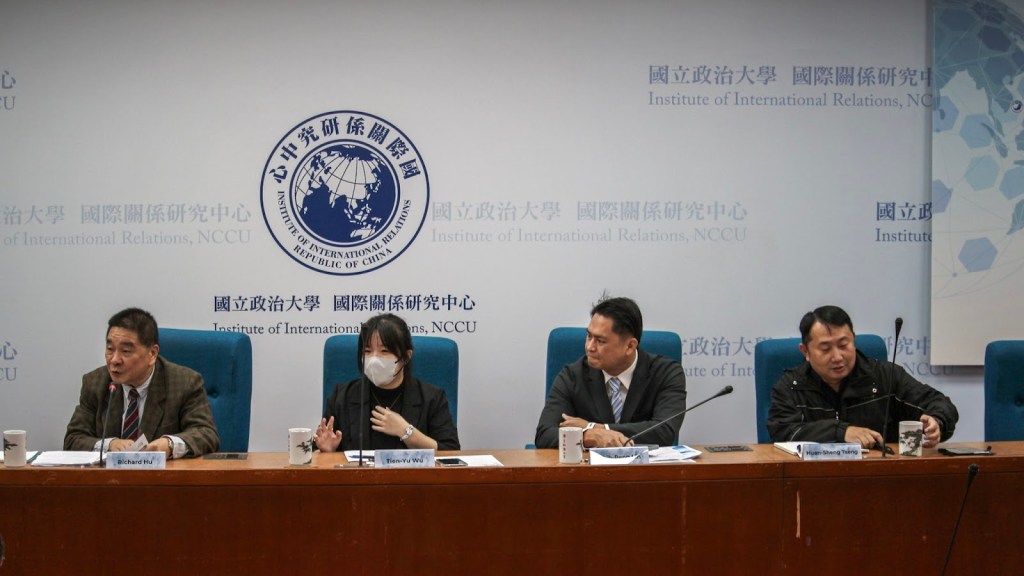
Legislative Yuan member and former ROC Navy Admiral Richard Chen stressed the importance of societal resilience for Taiwan’s security, in contrast to the overemphasis on hard power in defense, and highlighted the value of “peace games” – table-top exercises focused on preventing war, instead of fighting a war.

Professor Chyungly Lee emphasized that maritime jurisdictional claim enforcement is increasingly located in “grey zones,” including lawfare, maritime militia activities, and expanding use of UAVs and UUVs. Lee noted a growing shift toward grey-zone pressure in the private sector, particularly tourism and undersea infrastructure, and stressed that effective deterrence will require inter-agency coordination, enhanced resilience, and innovative political signaling among partners.”
Dr. Wei-Hua Chen expanded on these concerns with a focus on the defense of Taiwan’s undersea infrastructure. He warned that repeated cable disruptions and incidents near Kinmen illustrate escalating yet deniable coercion. Chen proposed developing a real-time “digital twin” surveillance network to enable anomaly detection, crisis response, and improved situational awareness in contested waters.
Dr. Ya-Wen Yu discussed the PRC’s hybrid operations in the South China Sea, noting that such activities test public will, erode confidence, and increasingly target energy security and sea lines of communication. She described expanding Taiwan-Philippines maritime cooperation as a promising avenue, especially given shared exposure to coercive tactics and reliance on LNG imports.
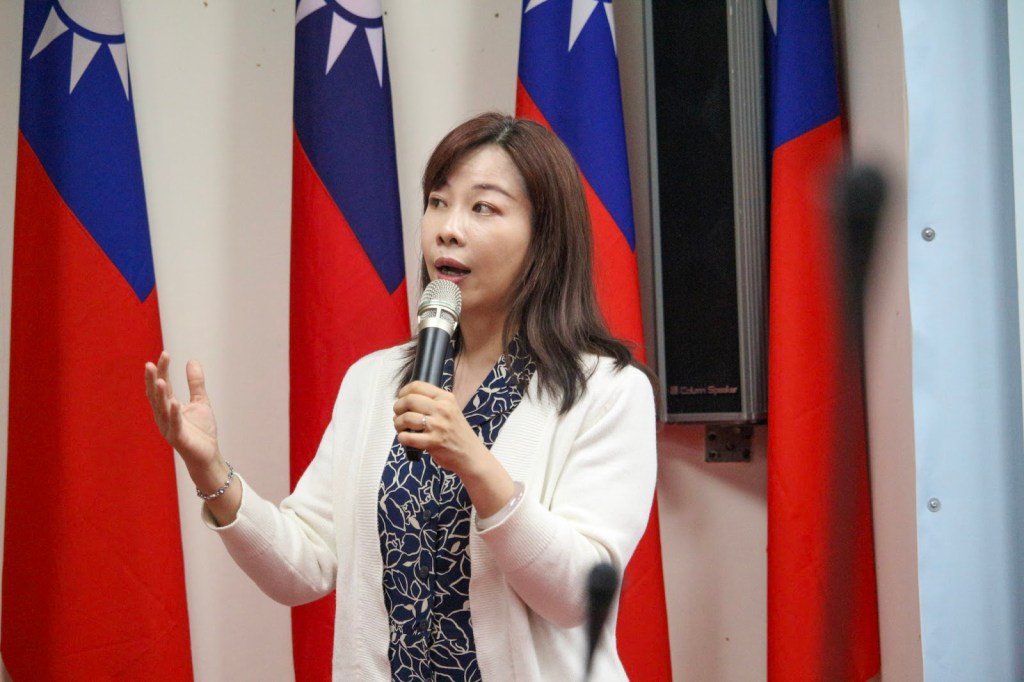
Panelists concluded by linking these developments to broader territorial dynamics: maritime disputes are rooted not only in resources and strategic access, but also in national identity, making compromise difficult and heightening the need for resilience-based security frameworks in the region.
Session 3
Moderated by Dr. Hon-Min Yau, Director of the Graduate Institute of International Security at NDU, the panel focused on assertions of maritime rights and national security guarantees in the South China Sea. The speakers underscored the need for resilient, rules-based maritime governance amidst rising tensions and stakes in the region.
Dr. Anne Hsiao presented evolving territorial claims and military build-up in the South China Sea, noting intensified island construction and unresolved Code of Conduct negotiations.
University of Canterbury Professor Alex Tan linked maritime security to the blue economy, emphasising Pacific Island Countries’ vulnerability to illegal fishing, climate impacts, and strategic competition among major powers.
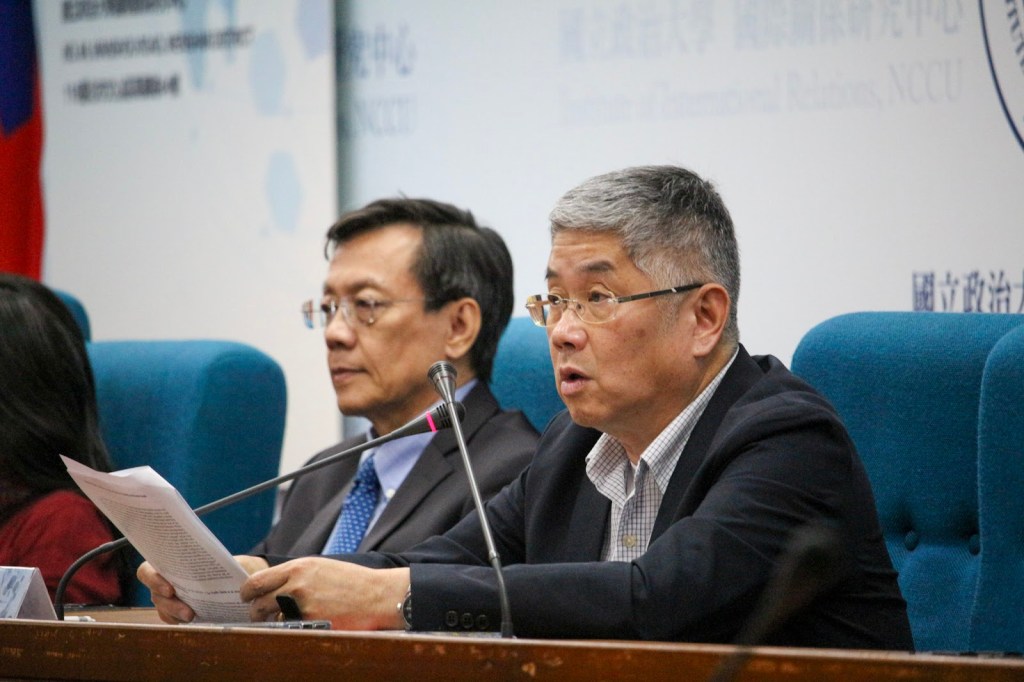
Dr. Fu-Kuo Liu urged renewed attention toward Taiwan’s South China Sea policy, calling for strengthened legal standing, development on Itu Aba (Taiping Island), and deeper regional cooperation.

Roundtable
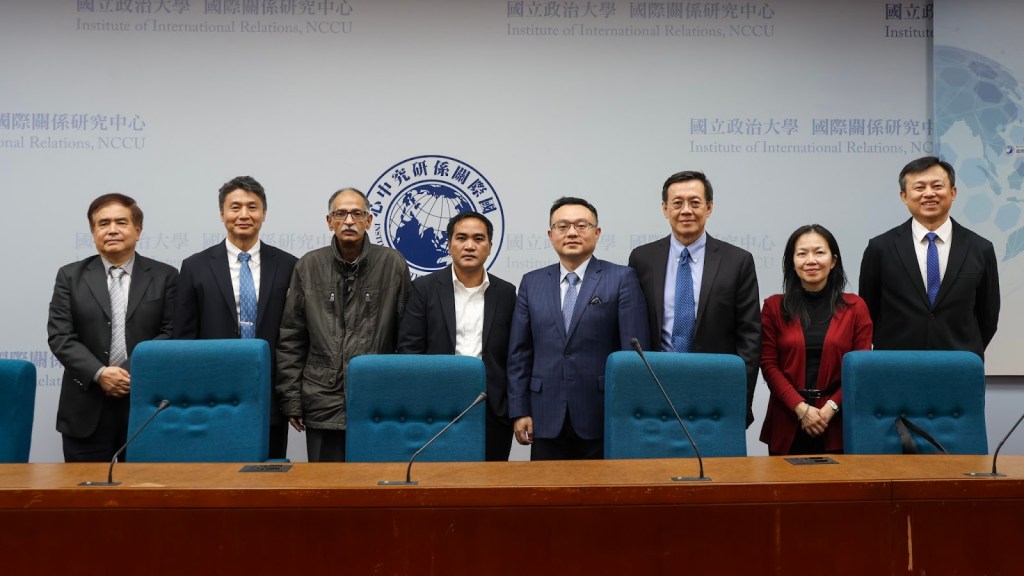
The conference concluded with a roundtable featuring NDU Director of Graduate Institute of Strategic Studies Ruei-lin Yu, South Asian University Director of the Interdisciplinary Climate Center of Excellence Pooran C. Pandey, NCCU Department of Diplomacy Chair Chong-han Wu, and TCSS MOFA Fellow Rhomir Yanquiling, moderated by Chung-young Chang and focusing on Taiwan’s mounting maritime and energy security risks amidst mounting PRC grey-zone tactics. The panelists emphasized the need for Taiwan to strengthen its energy partnerships with reliable regional partners, pursue legal frameworks that enable naval escort missions, and expand protection of undersea infrastructure. According to the panelists, regional peace depends on deterring coercion at sea, while territory, identity, and energy access now define Asia’s strategic future.
 Taiwan Center for Security Studies