
TCSS Security Commentaries #036
Despite the absence of tangible outcomes in China, Putin’s visit to Beijing holds significant symbolic value. It underscores that Russia is not isolated on the global stage, despite Western sencions, and highlights the reinforcement of Russian foreign policy in the direction of the Global South.
Italo M. de Queiroz, Intern, TCSS.
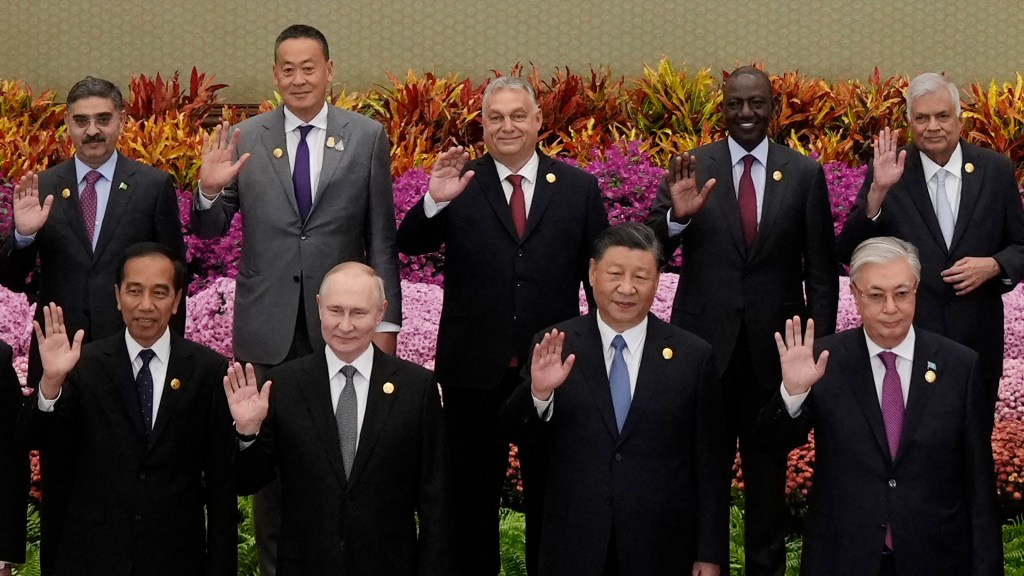
Global leaders convened in Beijing to commemorate the 10th anniversary of the Belt and Road Initiative (BRI). Over 130 nations participated in the two-day summit, noteworthy among them being Hungary’s Prime Minister Viktor Orbán, who has taken a more supportive stance toward China compared to his European counterparts.
The summit found itself in the midst of the ongoing conflict between Israel and Hamas, putting the Middle East in the spotlight. Beijing has been actively working to expand its presence in the Middle East, as a previous example of the mediation reconciliation between Iran and Saudi Arabia.
In a recently published white paper, China presented the initiative as a substitute for the current global economic framework, “The BRI is founded on the principles of extensive consultation, joint contribution, and shared benefits. It advocates win-win cooperation in pursuit of the greater good and shared interests. It emphasizes that all countries are equal participants, contributors and beneficiaries, and encourages economic integration, interconnected development, and the sharing of achievements”. President Xi’s objectives encompass strengthening investments in Global South countries and, promoting the use of the yuan as an international currency, he announced 130 billion yuan investment to developing nations.
What drew particular attention during this year’s summit was the presence of Russian President Vladimir Putin, who was a guest of honor. It marked his first trip to a major global power, such as China, since an arrest warrant was issued by the International Criminal Court (ICC) back in March, in the context of the conflict in Ukraine. President Putin had refrained from traveling to most places due to the fear of potential arrest, given that the ICC mandates its signatory countries to detain him. Notably, China is not a member of the ICC, providing him with a unique opportunity to attend the summit without such concerns.
Before the summit commenced, Putin held a meeting with the Hungarian Prime Minister, who had been critical of sanctions against Russia. During their discussion, they explored avenues to boost the supply of gas, oil, and other energy-related matters. On the sidelines of the forum, Putin also engaged with other leaders, including the Prime Minister of Thailand and the President of Vietnam. He accepted an invitation to visit the Southeast Asian countries in the near future.
One of the key objectives of Putin’s visit to China was to further strengthen the relationship with Beijing. China has evolved into a pivotal market for Russian natural resources, which plays a critical role in sustaining Russia’s financial stability amidst the ongoing conflict in Ukraine. However, Beijing remains cautious in its dealings with Moscow, neither openly condemning nor overtly supporting Russia in the ongoing war. While not being perceived as entirely neutral, President Xi is showing a heightened interest in mediating a potential peace agreement between Russia and Ukraine. This closeness might be viewed as a risk for China, but what binds the two nations is a shared desire for a new world order and the establishment of a multipolar global order.
President Putin attended the BRI forum with the anticipation of reaching an agreement regarding the construction of a gas pipeline. However, to his surprise, President Xi did not mention the Russian gas project. The final joint declaration only touched upon the broadening of cooperation within the energy sector, leaving the specific gas pipeline proposal unaddressed.
Indeed, it’s fair to say that President Putin left the forum with a more optimistic outlook compared to before, even without concrete agreements. This event provided him with an opportunity to affirm that he is not isolated by Western powers. His meeting with President Xi added legitimacy to his role as a global leader, especially in the context of other leaders, particularly those from the global North, distancing themselves due to the Ukraine conflict. Although the Putin pipeline project didn’t gain momentum, the Russian President enjoyed the symbolic presence at the BRI forum. Furthermore, the trip reinforced the redirection of Russian foreign policy towards the global south.
Italo Matos de Queiroz is an undergraduate student at Ming Chuan University, where he majors in International Affairs and Diplomacy and an intern at TCSS.
 Taiwan Center for Security Studies