
TCSS Security Commentaries #036
AMerica has recommitted to engaging with the small island states of the South Pacific. Whilst it has demonstrated it is willing to give salience to their issues, it is clear the US’ driving goal is to counter the strategic gains made by the PRC in the region. for america to successfully establish strategic primacy, it must remain responsive to the region’s needs.
Ethan Pooley, Intern, TCSS.
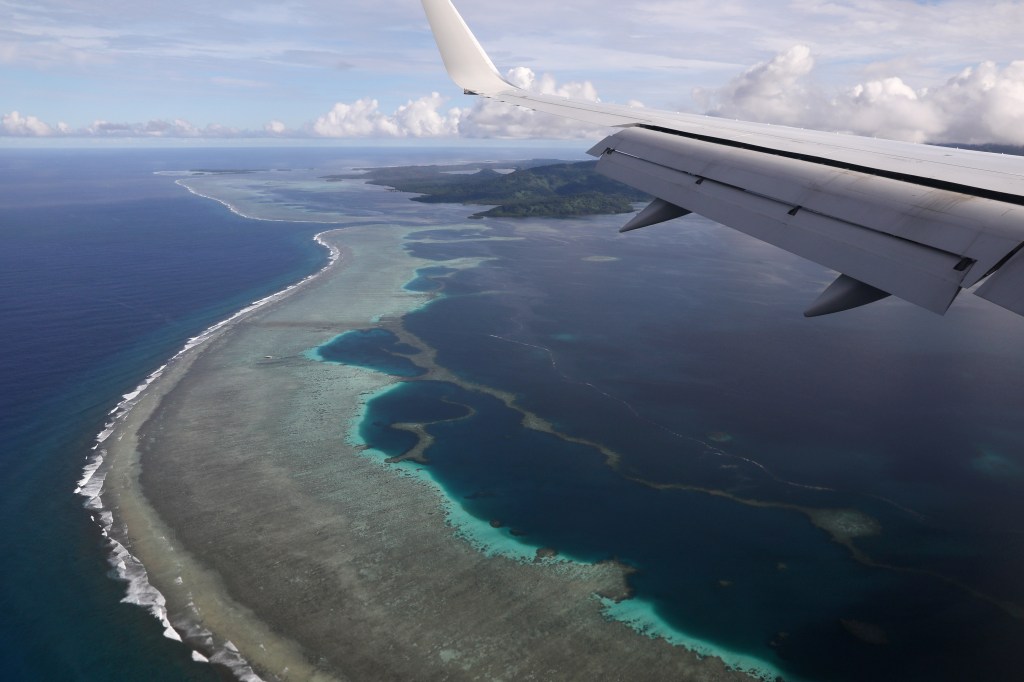
On September 25, the United States’ (US) President, Joe Biden hosted Pacific Island Countries (PIC) for a summit at the White House. It is the second consecutive year the summit has taken place and constitutes an aspect of the US’ effort to re-commit to engaging with the region in light of an established and growing People’s Republic of China (PRC) presence. Whilst US engagement has been welcomed by the region, it has not come without scrutiny from domestic and regional actors whose concerns range from memories of its recent history of colonial and imperial exploitation to the region becoming militarised and divided. Despite this, many items on the agenda at the summit – including, among others, the climate crisis, diplomatic ties, people to people ties, development aid and infrastructure investment – arouse genuine interest in PICs. But, with the US’ motivations unquestionably driven by countering, even suppressing, PRC influence, the real test for the US will be whether their strategy continues to emphasize regionalism and give primacy to PIC issues long into the future.
Washington seems to certainly think this is possible. At the summit, President Biden remarked that ‘the history and the future of the Pacific Islands and the United States are inextricably linked’. Moreover, one of his officials sought to alleviate the aforementioned concerns by assuring PICs that the US ‘is a Pacific power that is here to stay’.
Whether PICs are convinced by this or not is beside the point. Their governments have demonstrated a willingness to engage with any actor that shows an interest in addressing the pressing issues the region faces. This, however, underscores the risk for the US – as, if it fails to live up to its commitments, its rival will be ready to fill the gap.
To further explore the US’ strategy in the region, and demonstrate its contested nature within PICs, the recently signed 15-year agreement – the Defence Cooperation Agreement (DCA) – to deepen military cooperation between the US and Papua New Guinea (PNG), the regions largest and most populous country, provides a useful case study. The DCA’s broad scope provides the US military ‘unimpeded access’ to six PNG defence facilities – including military bases, airports and sea-ports. As outlined in the agreement, the US presence will be concerned with a range of activities including surveillance, reconnaissance activities, and the staging and deploying of troops, ships and aircraft, among others. Also, they will contribute to the enforcement of fishing regulations, natural disaster management, and clamp down on the trade in illicit goods.
The deal represents another example of the US’ ‘places not bases’ strategy which sees a priority placed on the US military gaining access to the infrastructure of its allies and partners on a transient basis. Through this system, the US is able to both cooperate closely with its partners and enhance its ability to project power without spending the capital – economic as well as political – required to operate its own base. As PNG is one of only three PICs with a military, along with Fiji and Tonga, it is a significant addition to the US’ effort to deepen its military footprint in the western Pacific.
The deal, however, has been met with opposition. Unpersuaded by PNG Prime Minister James Marape’s rhetoric – that his country must ‘actively and selectively’ engage with friends ‘for its national interest’, and that the deal is important for maintaining PNG’s ‘territorial integrity and sovereignty independence’ – students, unions and the PNG political opposition have all protested the DCA’s signing. Short of ‘maintaining sovereignty’ and ‘pursuing the national interest’, they argue that the deal in fact sacrifices PNG’s sovereignty in its strategic decision making and that the deal signals an abandonment of PNG’s long standing foreign policy tradition of ‘friends to all, enemy to none’. Moreover, they say the deal unnecessarily signs PNG to the US strategy of containing the PRC – which threatens economic ties with its second largest trade partner. Despite this pushback, the general consensus is that, in the end, the DCA will go ahead as planned and the tension is simply reflective of the democratic process.
Outside of the DCA, however, the domestic reaction to further aligning PNG’s military with larger actors appears to have been heeded by Port Morsby. Shortly after the US deal was announced in May, PM Marape postponed the signing of an upgrade to the defence partnership between PNG and Australia – citing that the agreement’s wording ‘encroached on the nation’s sovereignty’. This is a setback for Australia who, during a leader level visit to PNG in January 2023, agreed to finalise negotiations by April for a June signing. To be sure, Australia would not oppose its ally’s assistance in responding to the influence Beijing has established. Also, the US’ contribution to the region’s needs will be warmly welcomed. Notwithstanding this, Canberra will be frustrated that the politically tense environment brought on by the US deal was undoubtedly the key reason for its deal to be shelved. Also, supporting the US deal could create headaches for Canberra as it potentially undermines the principle of ‘family first’ – whereby PICs manage regional affairs, particularly regarding security, through regional frameworks – which is called on when advocating that cooperation with the PRC should be limited to the economic realm.
The PRC’s inroads over the last decade in the South Pacific have awoken a US that is keen to reassert itself as the strategic partner choice. Standing in their way, however, is a diverse Pacific Island population that contests the binaries presented by great power rivalry, and governments that seek to play off all willing ‘partners’ to further their economic and environmental goals. Whilst the US has shown it is capable of responding to the needs of PICs – which includes not insignificant increases to aid, infrastructure development, and diplomatic ties – so has the PRC. As such, with the DCA secured, it must continually double down on this approach. Only then will its military presence be justified.
Ethan Pooley is a New Colombo Plan scholar undertaking an internship the Taiwan Center of Security Studies.
 Taiwan Center for Security Studies