
TCSS Security Commentaries #035
Africa can now voice its interests directly to the worlds most influential global actors more often. However, the extent to which this can meaningfully transform Africa’s issues will depend on the real character of the leadership that the Africa union takes to the G20 platform.
Nnanna Onuoha Arukwe (PhD), MOFA Fellow, TCSS.
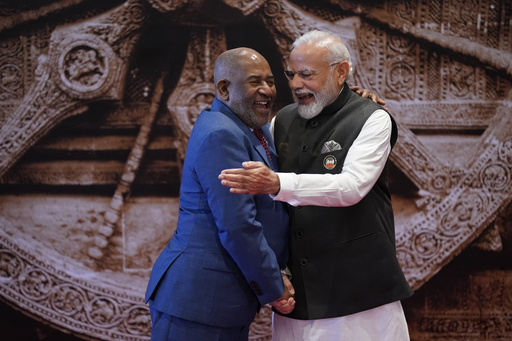
At the G20 conference in New Delhi, India, at the beginning of September 2023, the African Union, (AU) —which had previously been only an ‘invited international organization’—was given full member status. This means that the continent gains the same standing as the European Union, which hitherto has sat alongside 19 nations, including the US, the UK, and Russia. Effectively, the G20 just became the G21 with the addition of the African Union.
By this development, Argentina, Australia, Brazil, Canada, China, France, Germany, India, Indonesia, Italy, Japan, South Korea, Mexico, Russia, Saudi Arabia, South Africa, Turkey, United Kingdom, and the United States are currently permanent members of the G20, in addition to the European Union and African Union. The addition of the African Union to the G20, which Prime Minister Modi of India proposed in June, has been praised by a cross-section of African leaders as giving the continent a voice. This, however, is contrasted against a backdrop of the larger African populace who see the development as too little too late or, at best, only the beginning of the inevitable decolonization of global institutions including the United Nations’ Security Council and the Bretton Woods financial institutions, among others. The largely unanswered question, however, is how will the African Union’s permanent seat at the G20 affect African issues?
First of all, membership of the G20 will give the continent’s political leadership the ability to leverage the new platform to canvass for support in addressing the climate emergency in Africa. As it turns out, Africa is disproportionately affected by the climate catastrophe despite Africa contributing an insignificant percentage of global emissions. The continent’s economies, ecosystems, and food security are all being harmed by the climate emergency. Additionally, it heightens the risk of conflict over resources, which could be exemplified in the water conflict between Egypt and Ethiopia.
Similarly, the African Union could leverage its presence on the G20 platform to gain support in tackling food insecurity in the eastern and southern regions of Africa. These regions, known as the Swahili Belt, contain 26 nations and are home to about 60% of Africa’s population. Food insecurity, brought on by a series of global and regional crises, including, but not limited to, the COVID-19 pandemic and the Russia-Ukraine War, has brought untold hardships to these peoples.
Also, with the preponderance of the most influential countries on this platform, the African Union could leverage the G20 to solicit for international support in handling the crisis in the rare earth minerals belt of Africa. Africa’s most geopolitically unstable region is Central Africa, otherwise known as Africa’s Rare Earth Minerals Belt. The geopolitical situation in this region is largely influenced by the presence of rare earth minerals there. For instance, the humanitarian and health sectors are currently being impacted by the fighting in eastern Congo. The world’s supplies of coltan and cobalt, two components required to make batteries, may be impacted if it gets worse. In the Democratic Republic of the Congo (DRC), there are reportedly around six million internally displaced people. Burundi, Rwanda, and Uganda are some of the other nations in this belt that are directly affected by the conflict. The same goes for the Libyan crisis that was originally triggered by the killing of former Libyan President Muammar Gaddafi by French-led NATO forces and the United States; as well as the growing jihadist terrorism in the Sahel that resulted directly from the killing of Gaddafi. There is also the issue of self-determination agitations in the Gulf of Guinea to which the inclusion of the African Union in the G20 platform could facilitate a more democratic and peaceful resolution to.
Indeed, there are several forgotten or ignored problems within the African continent that the African Union will now have a platform to advocate to an influential global network for. However, a lot would have to depend on the character of the political leadership that is going to represent Africa on this platform. This is because the majority of Africa’s political leadership at present are viewed by the preponderantly youthful African population as sell-outs and neocolonial puppets of the colonizers in Africa. They are therefore seen as unpatriotic and liable to betray real African interests at the slightest nudge by their puppeteers.
It is in the foregoing sense that one needs to understand the overwhelming popularity of the coup leaders in the Sahel region, not just among the region’s youth population but among the youth across all African regions. Their interventions in politics are largely seen as a patriotic effort to rescue those countries from French, and by extension European, colonialism and neocolonialism. On the other hand, the ECOWAS threat of military invasion to restore the deposed civilian president of Niger is viewed as the performative political theatre of a group of neo-colonial puppets doing the bidding of their colonial overlords.
It would therefore be plausible to conclude that the African Union’s permanent seat at the G20 presents excellent opportunities to be leveraged in addressing African issues. However, to what extent this opportunity is meaningfully and vigorously pursued towards transforming Africa’s issues would have to depend on the real character of the leadership that Africa takes to the G20 platform.
Nnanna Onuoha Arukwe is a Ministry of Foreign Affairs Fellow at TCSS, and a Professor at the Department of Sociology and Anthropology, Faculty of the Social Sciences, University of Nigeria, Nsukka. His research interests span but are not limited to the subjects matters in Area Studies, China-Africa Relations, Development Studies, Environmental Studies, Nationalism, Organization Studies, Postcolonialism, and Social Movements
 Taiwan Center for Security Studies