
TCSS Security Commentaries #033
The tactical diplomatic arrangement has burnished Beijing’s role as a reliable partner for other Gulf Cooperation Council (GCC) countries, boosting its soft power, stature, and reputation as a force for stability and proponent of peace in the Middle East.
Rebecca Chohwanglim, Visiting Scholar, TCSS.
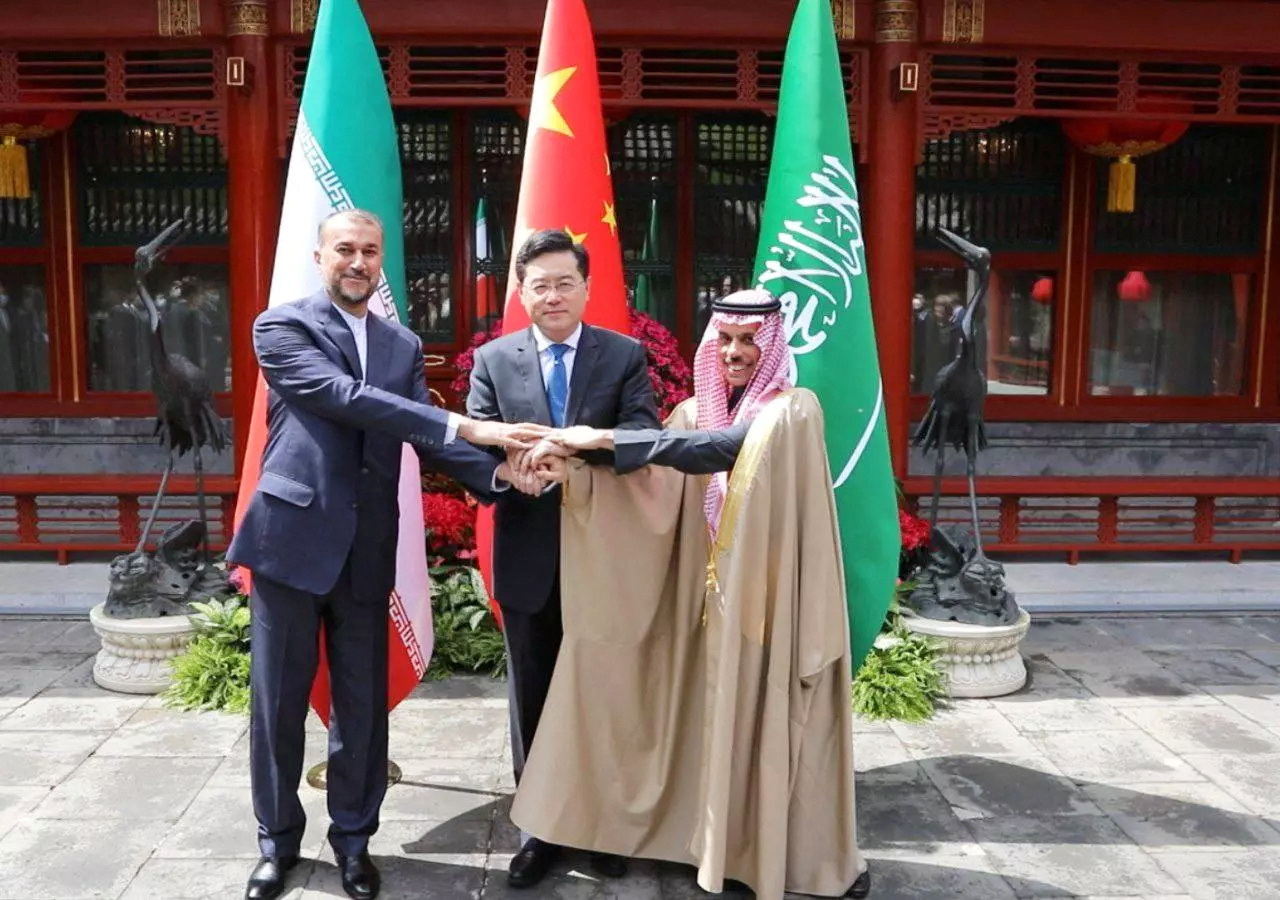
In March, Iran and Saudi Arabia consented to revive diplomatic relations for the first time since 2016 in a historic diplomatic overdrive designed by Beijing. A joint statement highlighted both parties’ emphasis on implementing the Beijing Agreement to enhance mutual trust, expand cooperation, and contribute to realizing regional security, stability, and prosperity. Both sides agreed on reopening diplomatic missions within two months and resumption of flights and bilateral visits. This rapprochement between the two great rivals in the Middle East is an exceptional development, over and above a diplomatic achievement for China.
China’s involvement in the breakthrough altered security dynamics in a conflict-torn region where the US has been the central intermediary for decades. This reconciliation mirrors the signatories’ inclination to uphold their strategic independence, build new alliances, eliminate “external interference,” and control the region’s future. Regional reality has gauged Riyadh to hesitantly accept the unpalatable growth of Iran’s military potential with a colossal weaponry of missiles and proxy militias across the region, a force unlikely to be defeated by Saudi Arabia and its allies. Besides, Saudi Arabia no longer sees the US as a reliable ally amid tensions between the two over human rights issues and oil production cuts, among other altercations. As for US-Iran ties, the two countries have not had diplomatic relations for over four decades.
In contrast, China is the largest trading partner of Iran and Saudi Arabia, a major source of foreign currency for Iran, and has close diplomatic and economic ties with both countries. The latest development demonstrates Beijing’s determination to expand its diplomatic influence in the Middle East and balance instability. China has been successful in providing favorable conditions to foster the agreement, a vivid demonstration of the policies and concepts of China’s diplomacy, which included a major initiative of building a community with a Shared Future for Mankind.
Iran and Saudi Arabia have also shown interest in joining the Shanghai Cooperation Organization (SCO), a multilateral security grouping initiated and shaped by China. It points towards China providing a new narrative where it does not want to be simply viewed as filling the vacuum left by the US but strives to portray a different nature of leadership and democracy, where each nation chooses its own course of development through dialogue and consultation. China’s openness and inclusiveness mantra of development resonates well with populist and autocratic states.
This diplomatic initiative indicates an acceptance of formerly unseen responsibility for stability in the region and positions Beijing as a competent strategic player. China’s balanced cooperation with Saudi Arabia and Iran is essential to access rare earth materials, of which Saudi Arabia is the largest processor. Moreover, securing uninterrupted access to Saudi and Iranian oil is vital for Beijing’s continued economic growth and for protecting its geo-economic interests, particularly to supplement its Belt and Road Initiative.
Another strategic objective for China at a time of heightened global instability is to raise further questions on the credibility and reliability of the US role in the region and end the hegemony of the petrodollar, which is in the interest of all the parties. Besides, regional stability is fundamental to advancing mutual trade, investment, and economic ambitions. Xinjiang, China’s core interest, is also an issue that could satisfy Iran and Saudi Arabia, as they want to avoid insurrection.
Nonetheless, regardless of China’s ambitions, increasing volatility in the Gulf is a reality that it has to contend with. Therefore, China benefits from any stability that can be reached through Saudi-Iranian rapprochement. Although China’s diplomatic skill is applauded, the tradition of non-interventionist policy in its international engagement means its relations are often founded on and limited by economic reckoning. Therefore, it’s not likely that China will seek to replace the US and carry the mantle of peace in the region.
The US and China’s interests in the Gulf overlap significantly. Both want the region to remain conflict-free and its energy to be extracted uninterruptedly and shipped freely. In many ways, the Saudi-Iran deal is not zero-sum, and the numerous actors involved might diversify their interests as the situation advances. While Chinese statecraft now faces a crucial test with the new role as a “sponsor” in the regional security architecture, Beijing is yet to subsume the role of a guarantor. Still, this tactical arrangement has also burnished its role as a reliable partner for other Gulf Cooperation Council (GCC) countries, boosting its soft power, stature, and reputation as a force for stability and proponent of peace in the Middle East.
While this rapprochement favors China’s economic prosperity agenda, secures its investments, and fosters an environment for mutual trade to flourish, the litmus test for the deal’s success will be whether China keeps interfering in the domestic politics of countries across the region. The situation is volatile as it might just break down over a Houthi attack instigated by Iran. However, the rapprochement could mean improved security for Saudi Arabia as it pursues its vast Vision 2030 project to modernize and diversify its oil-dependent economy. Thus, as China will avoid becoming embroiled in the conflict between the two Middle Eastern rivals, the sustainability of this agreement will depend on how the parties implement and compromise their interests.
Rebecca Chohwanglim is a doctoral candidate in International Studies at Jawaharlal Nehru University, Delhi, and a Visiting Scholar at TCSS.
 Taiwan Center for Security Studies