
TCSS Security Commentaries #033
While it is still a work in progress, we can assess that the Feminist Foreign Policy of Germany represents a commitment to promote gender equality and human rights around the world by recognizing the importance of a feminist perspective in foreign policy.
-Pauline Geyer, Intern, TCSS
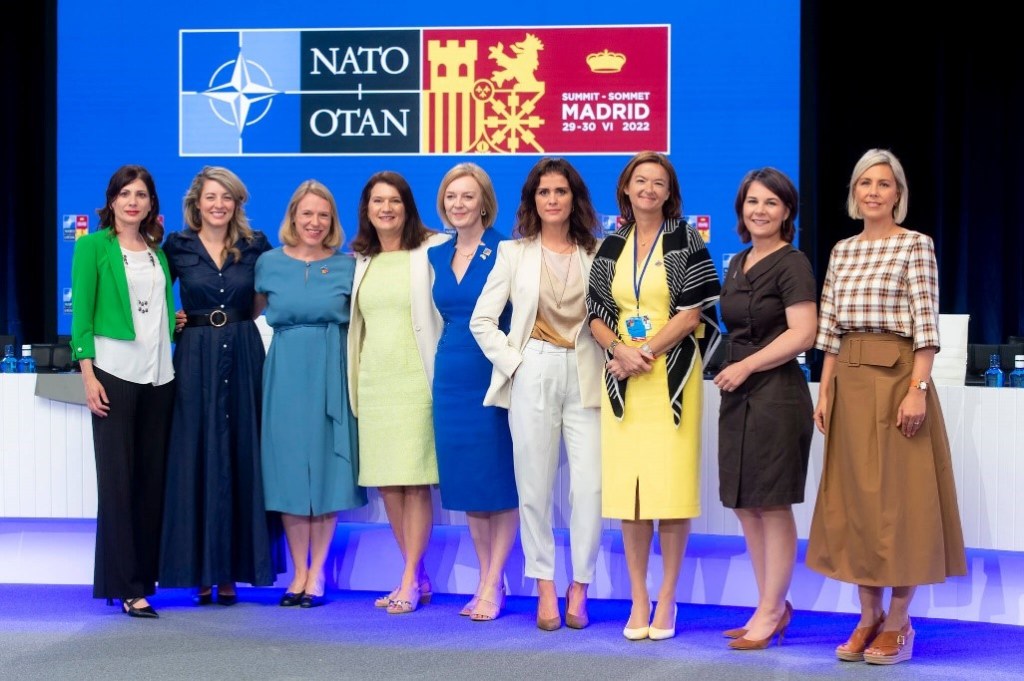
With the words “as long as women are not safe, nobody is safe,” the first female German Foreign Minister, Annalena Baerbock, introduced the country’s new 2023 Foreign Policy Guidelines. Since 2019 Germany has adopted a new foreign policy approach – the Feminist Foreign Policy (FFP). While the approach has been widely discussed in recent years, clearly formulated FFP Guidelines are released now. By implementing an FFP approach, Germany follows in the footsteps of other countries like Canada. The policy is based on the knowledge that gender disparities exist on a global scale and threaten world peace, security, and sustainable development. The new guidelines, therefore, aim to advance human rights, gender equality, the inclusion of underrepresented groups, and the empowerment of women and girls.
Women’s rights serve as a mark for the condition of societies. It has been proved that societies that strive for or achieve equality outperform those that exclude women and other groups from participation. When everyone, regardless of their gender, has equal access to social opportunities and rights, everybody benefits. However, FFP is by no means targeted towards women only. Instead, it devotes greater focus to those marginalized by society due to, among other factors, their religion, origin, gender, sexual orientation, or disabilities. Therefore, an FFP approach aims to identify and dismantle historically ingrained power structures to promote equality and fair participation for everyone everywhere.
The German FFP consists of six guidelines that aim to influence international policy. The first guideline stresses the importance of female and underrepresented perspectives in promoting peace and security with equal representation and protection. The second focuses on gender-sensitive humanitarian aid for marginalized groups. The third advances human rights, including LGBTQ+ communities. The fourth addresses the impact of climate change on vulnerable groups. The fifth advocates for economic progress and equal representation in leadership roles. The sixth guideline promotes equal representation in society by increasing the visibility of marginalized groups.
The implementation of the German FFP will require the use of various instruments to ensure that the guidelines are upheld. These instruments will include the appointment of an ambassador for FFP, the provision of expert contact persons at German embassies, compulsory training for employees, the incorporation of meetings with marginalized groups during foreign visits, and the inclusion of the guidelines in national strategy papers. Finally, monitoring and dialogue will be especially important for ensuring the policy remains relevant and effective.
The policy needs to be open to new ideas and criticisms. This will involve engaging in ongoing dialogue with marginalized groups, civil society organizations, and other stakeholders to assess the policy’s impact and identify new areas for action. Implementing the new guidelines will require changes in the old German systems, which may be challenging and needs adjustment of bureaucracy and outdated norms. It will for sure take time for employees and society as a whole to adopt and embrace the policy fully. The policy must therefore be sustainable and not subject to changing political winds of each legislative period. How Germany will solve these domestic challenges will shed light on how representative and effective the guidelines will be for the world.
The new German FFP Guidelines will have implications for the international community. The guidelines could lead to more cooperation with like-minded countries to promote FFP and develop joint initiatives. Furthermore, Germany’s FFP has the potential to positively impact other countries that haven’t implemented FFP by emphasizing the importance of gender equality and encouraging other countries to take similar action. However, Germany’s FFP, particularly in nations where gender equality is not as highly valued, may encounter opposition and criticism. Some states may reject the FFP because they see it as an interference in their internal affairs, while other nations may be prevented from accepting it by cultural and value differences.
Germany is unlikely to sever diplomatic ties with countries that do not support the new FFP guidelines. The country is well aware of its important partners and can’t afford to put them at risk. However, the country will prioritize a feminist approach to foreign policy without adopting a hardline stance. These guidelines primarily serve as a framework for German foreign policy. Therefore, the implementation may not result in immediate changes to all aspects of foreign policy.
Following this, we can be sure that the German FFP won’t change Germany or the world by tomorrow. Nevertheless, Germany is committed to emphasizing gender equality in its international relations. While it is still a work in progress, we can assess that the FFP of Germany represents a commitment to promote gender equality and human rights around the world by recognizing the importance of a feminist perspective in foreign policy. The optimistic outlook and commitment to ongoing dialogue and monitoring are encouraging signs of progress toward a more equitable and just global community.
Pauline Geyer is an undergraduate pursuing International Relations and Social Science from the University of Erfurt, Germany. She specializes in global security and public international law. She is an exchange student at the Department of Political Science at National Chengchi University and an Intern at TCSS.
 Taiwan Center for Security Studies